Skin Tightening Machines: HIFU, RF and RF Microneedling Compared
A machine for skin tightening is one of three energy platforms, focused ultrasound, surface radiofrequency or RF microneedling, and which one belongs in your room depends on your client mix and who is licensed to operate it. This page is the decision layer for buyers, not a catalogue: we compare depth, downtime, consumables and operator scope, then list exactly what to ask any supplier before you order. Pmise quotes per configuration, so you will find no prices here, only the questions that get you real ones.
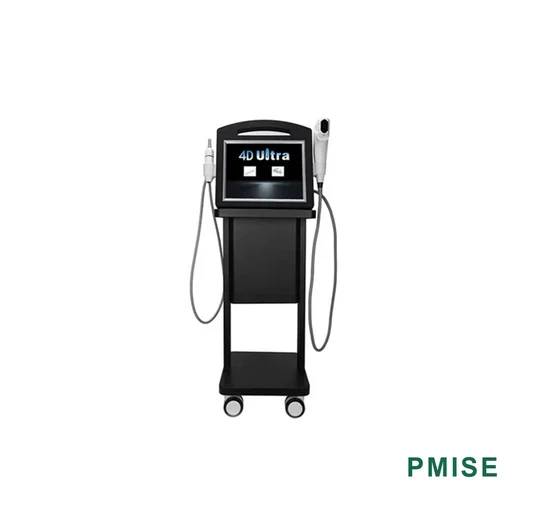
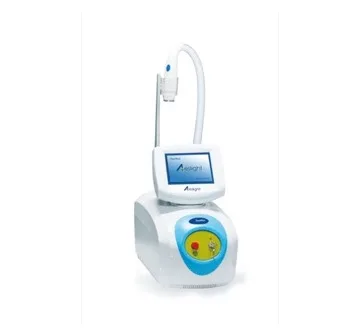
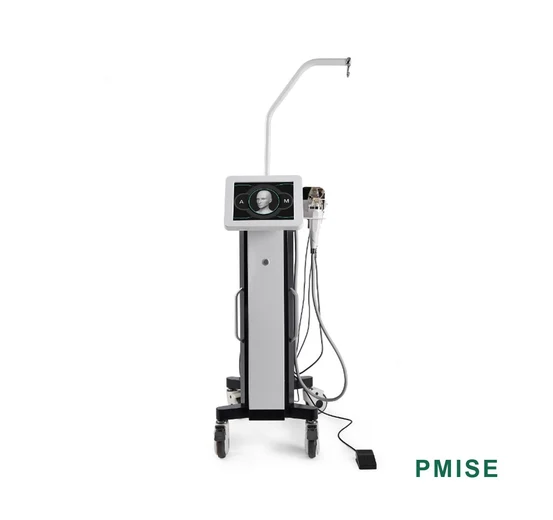
The Three Energy Families That Sell as a Skin Tightening Machine
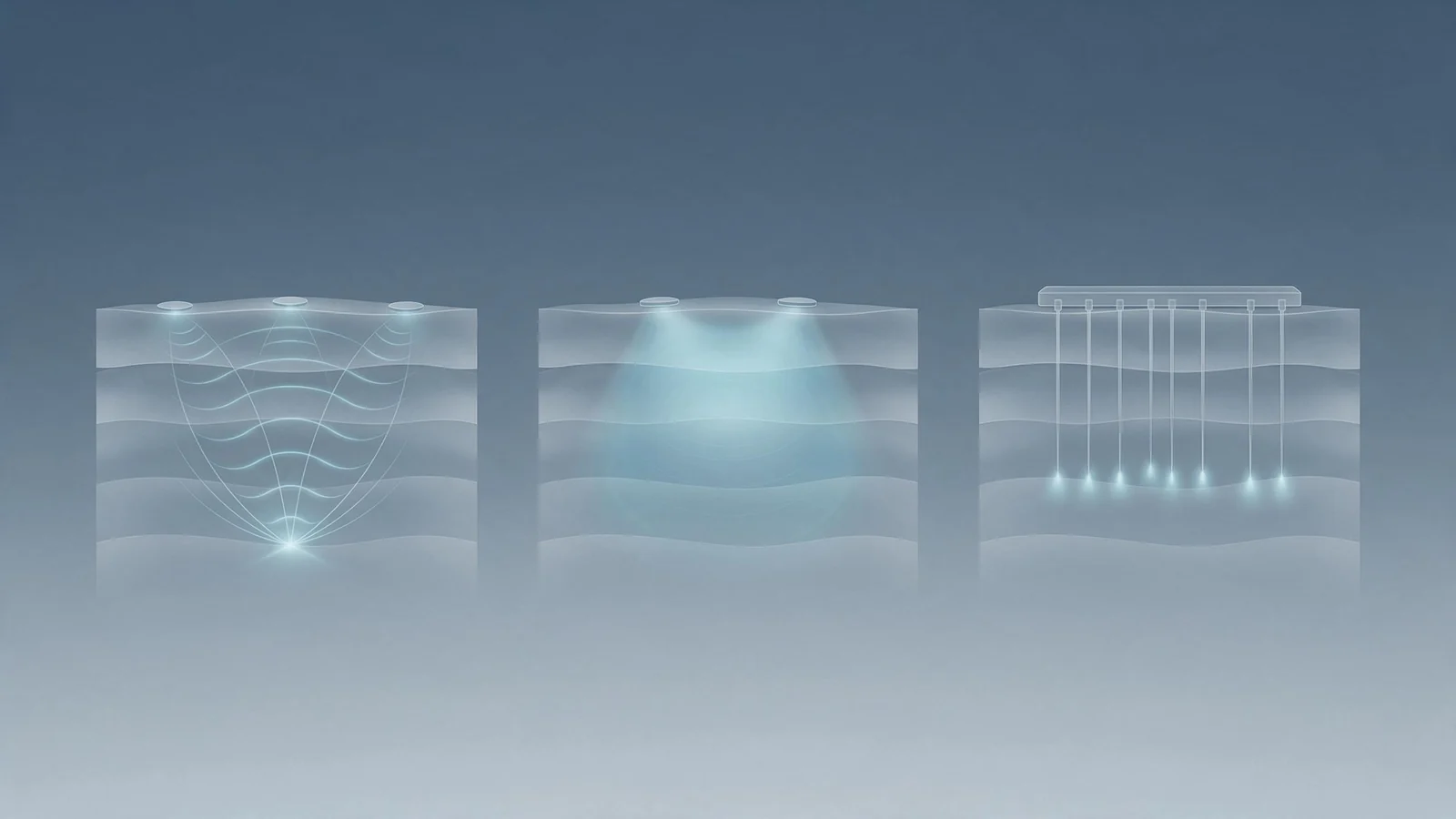
Strip away the brand names and every skin tightening machines for sale listing falls into one of three families. Focused ultrasound, which the trade calls HIFU. Surface radiofrequency, usually shortened to RF. And RF microneedling, where needles carry the current below the surface. Three families, three different physical events inside the skin.
Focused ultrasound is the deepest and the most selective. A review of noninvasive skin tightening techniques describes how microfocused ultrasound can be focused on subcutaneous tissue where the temperature briefly reaches greater than 60°C, producing small thermal coagulation points under 1 mm³ in volume (PMC4327394). The energy skips the surface and lands at a chosen plane. That is why the handpiece carries interchangeable cartridges rather than one fixed tip.
Surface RF works differently. Instead of a focal point, it heats a volume. Our bipolar RF skin tightening platform uses RF dermal heating to drive collagen contraction and remodeling, with a working range that covers the epidermis, dermis and upper subcutaneous layer, roughly 5 mm, and a dermal heating target of approximately 45-60°C. Bipolar means the current runs between electrodes in the handpiece, so you keep it moving and you keep gel under it.
RF microneedling is the hybrid. The FDA describes these devices as using an array of small electrodes, the microneedles, that penetrate the skin and deliver RF energy to specific depths within and under the skin, with each microneedle producing a small area of intense heat at its tip (FDA safety communication, 15 October 2025). Mechanical penetration plus thermal delivery, in one pass. Our gold RF microneedling unit uses insulated needles, which keeps the heat at the tip instead of the surface.
None of these are consumer gadgets. They are professional platforms sold per configuration, and the configuration is what you are actually buying.
How Each Family Delivers Results: Depth, Downtime and Client Fit
Let's talk numbers you can put in a treatment record, because vague claims are how clinics end up with machines they cannot use.
Focused ultrasound. The HF-01 runs an output frequency of 4-7MHz with a 4D handle whose standard cartridges are 3.0mm and 4.5mm, with optional 16mm, 13mm, 10mm, 8mm and 6mm cartridges. A V-max handle covers 1.5mm, 3.0mm and 4.5mm, with optional 8mm and 13mm. So the same box can treat superficial tightening and deeper planes, which is why operators like it for face, jawline and selected body areas. Downtime is typically described as minimal, some redness, occasionally tenderness over the treated plane for a few days. You do not promise outcomes. You describe the plan and the expected recovery.
Surface RF. The RF-01 is bipolar, works to roughly 5 mm, targets 45-60°C in the dermis, and suits all Fitzpatrick types on the spec sheet. Coupling is conductive gel with the handpiece kept in motion, which is the whole safety story in one sentence: stop moving, and you concentrate heat you did not intend to concentrate. Downtime is usually the lightest of the three. Many clients go straight back to work. Fitzpatrick IV to VI clients still need a pigment conversation before you start, because post-inflammatory hyperpigmentation is a real risk whenever heat meets melanin-rich skin.
RF microneedling. The MN-01 gives needle depth adjustable from 0.5-3.0mm, energy levels 1-10, RF working time 50-950ms, RF output power 50W, output frequency 2-4MHz and output power 10-200W. Negative pressure runs 0-2 level. Depth control is the point: you choose the plane rather than hoping the current finds it. Downtime is real but short. A systematic review of RF microneedling found adverse events were uniformly characterized as mild and transient, with erythema and edema the most common, typically resolving within hours to a few days without intervention, and no studies reported scarring or severe infections (PMC13058395).
That review is worth reading in full before you buy. Its protocol was prospectively registered in PROSPERO under CRD420251152380 and followed PRISMA 2020 guidelines, and it searched PubMed, Embase, Cochrane CENTRAL and LILACS for English-language studies published between 1 January 2015 and 15 March 2025. That is a serious piece of work, not a vendor white paper.
Now the other side, because you need both. The FDA safety communication of 15 October 2025 warns that serious complications have been reported with certain uses of RF microneedling devices, including burns, scarring, fat loss, disfigurement and nerve damage, and the need for surgical repair or medical intervention. A retrospective review of FDA MAUDE reports from January 2013 to October 2025 identified 114 reports covering 224 events, with the most frequent complications being textural changes (25.0%), pigmentary alteration (18.3%) and fat loss (11.6%), plus inflammatory reactions (8.0%), burns (6.3%) and pain (5.4%); the face, neck and abdomen were the most treated regions (PMID 41886649).
Read those two paragraphs together. The method is well tolerated in trained hands and unforgiving in untrained ones. Depth, energy and pass count are clinical decisions, not menu options.
Comparison Table: HIFU vs Surface RF vs RF Microneedling
Fill this in from the spec sheet of the exact unit you are quoted, not from a brochure. Where a cell says ask, it means the answer varies by model and configuration and you should get it in writing.
| Factor | Focused ultrasound (HIFU) | Surface RF | RF microneedling |
|---|---|---|---|
| Energy type | Focused ultrasound, 4-7MHz on HF-01 | Bipolar radio frequency | Gold RF microneedling, insulated needles, 2-4MHz on MN-01 |
| Typical depth | 3.0mm and 4.5mm standard cartridges; optional 1.5mm to 16mm | Epidermis, dermis and upper subcutaneous layer, about 5mm | 0.5-3.0mm adjustable needle depth |
| Consumable per treatment | Cartridge | Conductive gel | Needle tip |
| Operator skill | Plane selection and cartridge choice; ask supplier for training scope | Handpiece in motion, gel coupling; entry-level in trained hands | Depth, energy and pass protocol; ask supplier for training scope |
| Client profile | Laxity on face, jawline, selected body areas | All Fitzpatrick types per spec sheet; mild laxity, maintenance | Texture, scarring and laxity; medical oversight questions apply |
| Downtime (qualitative) | Minimal to light | Lightest of the three | Short but visible; erythema and edema most common |
| Price | Ask, quoted per configuration | Ask, quoted per configuration | Ask, quoted per configuration |
Two cells deserve a flag. Operator skill is not a spec, it is a training outcome, so ask what training is included and in what format. And downtime depends on settings you choose, not on the family alone.
Consumables and Per-Treatment Economics by Method
This is the section the catalogue pages skip, and it is the one that decides whether a machine makes money in year two.
Two of the three families eat a consumable every treatment. The HF-01 consumes cartridges: 3.0mm and 4.5mm standard on the 4D handle, 1.5mm, 3.0mm and 4.5mm on the V-max handle, plus optional sizes, and a 3.0mm and 4.5mm vaginal cartridge on the optional vaginal handle. The MN-01 consumes needle tips across its microneedle, acne and cold hammer handles. The RF-01 mainly consumes conductive gel, which is cheap, locally sourced and never a supply-chain risk.
That difference changes your cost per client in a way that compounds. A cartridge or needle model puts a hard floor under every treatment: you cannot discount below the consumable and stay solvent. A gel model has a soft floor, which is why surface RF is often the add-on that fills quiet hours rather than the headline treatment.
Cost per client is a method, so here is how to build it. One, get consumable life in writing, meaning how many shots, passes or sessions a cartridge or tip is rated for, and whether that is per client or per session. Two, get the reorder lead time and the minimum order quantity in writing, because a two-week reorder gap is a two-week gap in your booking sheet. Three, ask about storage: temperature range, shelf life, and whether the item degrades once opened. Four, ask whether the supplier holds stock locally or ships per order.
We do not publish prices, and Pmise quotes per configuration. Any supplier who will not put consumable life and consumable price in writing before you order is telling you something useful.
Salon or Clinic: Operator Scope, Room and Workflow
This is the question the ranking pages dodge, so let's answer it directly and carefully. Scope of practice is set locally, and it varies enormously between countries, states and provinces. What follows is the shape of the question, not legal advice for your jurisdiction.
In a salon setting, surface RF is the family most commonly operated by trained beauty therapists without a medical director, because it is non-invasive, needs gel coupling and a moving handpiece, and involves no needle handling. RF microneedling breaks the skin with needles, so in many jurisdictions it falls under medical or nursing scope, or under delegated practice with a supervising clinician. Focused ultrasound sits in between and depends heavily on the cartridge and the depth used: superficial work and deep plane work are not the same regulatory act.
So before you buy skin tightening machine stock for a salon, call your local health authority or professional body and ask one question in writing: which of these three energy families may a therapist in my setting operate, and under what supervision? Do that before the purchase order, not after. A machine you cannot legally switch on is the most expensive thing in the room.
Room and workflow requirements are modest but specific. You need a treatment couch the client can lie on for the full session, a trolley for gel and consumables, and enough clearance for the operator to move around the couch on both sides. Surface RF needs gel within reach and a handpiece kept in motion for the whole pass. RF microneedling needs sharps handling, a clinical waste route and a clean field. Focused ultrasound needs cartridge changes mid-session, so plan storage at the couch, not across the room.
Sterile technique matters as much as the machine. If you are not set up for it, buy surface RF and refer the rest.
For Sale and Buy: What to Ask Any Supplier Before You Order
Every supplier claims to be the best. Documents are how you tell them apart.
- Model-specific certificates, not company-level claims. Ask for the certificate that names the exact model number you are buying. A quality system certificate for the factory is not the same document as a device registration for your model, and the two are often blurred in sales conversations.
- Clearance or registration documents for your market. If the supplier claims a clearance, ask for the certificate number and the exact model it covers, then verify it yourself in the relevant public database.
- A full spec sheet for the quoted configuration. Wavelength, frequency, power, depth range, spot or needle geometry, cooling method and power supply. If the quote does not name the configuration, it is not a quote.
- Training: content and format. How many hours, on site or remote, hands-on or classroom, and whether a protocol manual is provided.
- Spare parts list and lead time. Handpieces, cables, cartridges, fuses. Ask what ships from local stock.
- Warranty terms in writing. Duration, what is covered, what voids it, and who pays return freight.
- Lead time and Incoterms. Ex-works, FOB, CIF or DDP changes your landed cost and your risk more than the unit price does.
- Consumable life and price. Per unit and per treatment, in writing.
How to Decide Which Machine Is Best for Your Business
There is no single best skin tightening machine, and anyone who tells you otherwise is selling something. What exists is a best fit for your client base, your operator and your room.
Start with the client base. If most of your bookings are maintenance clients with mild laxity who want zero downtime, surface RF fits. If you have clients asking about jawline definition and deeper laxity, and you have the training and the regulatory scope, focused ultrasound is the conversation. If texture, scarring and laxity arrive together, RF microneedling covers more ground per session, provided you can handle needles and, where required, clinical supervision.
Then map operator skill. Surface RF is the shallowest learning curve of the three. Focused ultrasound rewards anatomy knowledge because you are choosing a plane. RF microneedling punishes guesswork, since depth, energy level and pass count are all yours to set.
Then weigh the consumable model against rebooking. Cartridge and needle systems create a natural rebooking rhythm and a predictable unit cost. Gel-only systems are cheaper per session but easier for a competitor to undercut. Neither is wrong. They suit different businesses.
If you are sequencing devices over time, our comparison of HIFU versus RF and which to buy first walks through that decision, and RF skin devices explained covers the surface RF and microneedling side in more detail.
Last, a word on expectations. Nothing here is a cure, and no honest supplier promises one. Skin laxity has medical causes that need diagnosis and sometimes referral, and pigment risk rises with skin type. This is educational material for equipment buyers, not medical advice, and the clinical judgement stays with the practitioner in the room.
FAQ
Do skin tightening machines really work?
They do something measurable, and the honest answer is that the effect depends on the method, the settings and the operator. Focused ultrasound creates small thermal coagulation points in subcutaneous tissue; surface RF heats the dermis to roughly 45-60 degrees Celsius; RF microneedling delivers heat at a chosen depth via insulated needles. A systematic review of RF microneedling found adverse events were mostly mild and transient, with erythema and edema most common, and no scarring or severe infections reported. What no machine does is replace diagnosis, and results vary by client.
Which device is best for skin tightening?
There is no single best device, because the three families do different jobs. Focused ultrasound targets deeper planes and suits laxity on the face, jawline and selected body areas. Surface RF is the lightest-downtime option and works as a maintenance or add-on treatment. RF microneedling combines depth control with texture and scarring work but needs needle handling and, in many places, clinical supervision. Match the family to your client base, your operator skill and your local scope of practice before you compare brands.
Is there a skin tightener that actually works?
The ones that work are the ones used correctly. Focused ultrasound reaches subcutaneous tissue where the temperature briefly exceeds 60 degrees Celsius, creating thermal coagulation points under 1 cubic millimetre. Surface RF heats a roughly 5 mm working range with a moving handpiece and conductive gel. RF microneedling places energy at 0.5 to 3.0 mm of adjustable depth. The FDA has warned that serious complications, including burns, scarring and fat loss, have been reported with certain RF microneedling uses, so training and depth discipline matter as much as the device.
What should you ask a supplier before buying a skin tightening machine?
Ask for model-specific certificates rather than company-level claims, and verify any clearance number yourself. Request a full spec sheet for the exact configuration quoted, covering frequency, power and depth. Get training content and format, spare parts list, warranty terms, lead time and Incoterms in writing. Ask for consumable life and consumable price per treatment in writing, plus storage conditions and reorder lead time. If a supplier will not put these in writing, treat that as your answer.
Evidence and further reading
Educational material for equipment buyers and operators. It is not medical advice, an operating protocol or a promise of clinical outcome.
- Radiofrequency Microneedling for Facial Rejuvenation: A Systematic Review - PMC
- Potential Risks with Certain Uses of Radiofrequency Microneedling
- Analysis of US Food and Drug Administration Data on Radiofrequency Microneedling Device Complications. - Abstract
- Noninvasive skin tightening: focus on new ultrasound techniques - PMC
Ready to spec your next machine?
Tell us the indication, your market and the certifications you need. Our export team replies with a configuration and quotation within 12 to 24 hours.