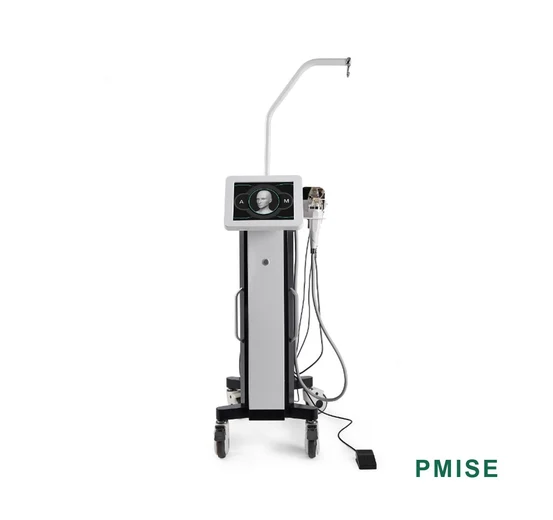
How it works
Needles reach an adjustable 0.5 to 3.0mm, and only the tips release RF. The shafts are sleeved. So the epidermis takes a puncture, not the RF burn, while the dermis gets controlled heating and coagulation. Our archive's RF primer gives the band: dermal tissue at 45 to 60°C, where collagen regeneration starts. A 2025 Lasers in Medical Science dose-response analysis by Lynhda Nguyen and colleagues ties coagulation volume to energy per needle.
Insulation matters more than brochures suggest. Heat reaching melanocytes can trigger post-inflammatory pigmentation, and darker skin reacts harder. Non-insulated needles radiate along the whole shaft, so the epidermis sits in the thermal path and pulse timing does the protecting. Surface RF protocols in our archive hold the epidermis at 34 to 36°C, ceiling 44°C. That margin is narrow.
Depth selection is the real skill. Stretch marks and body scars sit deep and want the long end; fine lines want the shallow end, periorbital skin shallowest. Four tips cover the map: 64-pin for body, 25-pin for the face, 10-pin for corners, crystal nano for surface work. Energy runs 1 to 10, RF time 50 to 950ms, delay 0 to 3s. Collagen contracts sharply near 60 to 65°C, so timing is not a detail.
Negative pressure earns its place. At level 0 to 2 it lifts and holds tissue, so needles enter at a consistent angle. On loose abdominal skin, that keeps a pass uniform.