RF Microneedling Machines: Needle Depth, Insulation and What to Verify
Think RF microneedling. It's the workhorse for clinics treating acne scars, wrinkles, and laxity without full resurfacing laser downtime. You get radiofrequency energy delivered through fine needles that pierce the skin at a set depth, heating the dermis and sparing the surface. But not all devices are equal. Skip the spec sheet and you'll end up with a handpiece that fights you on every pass.
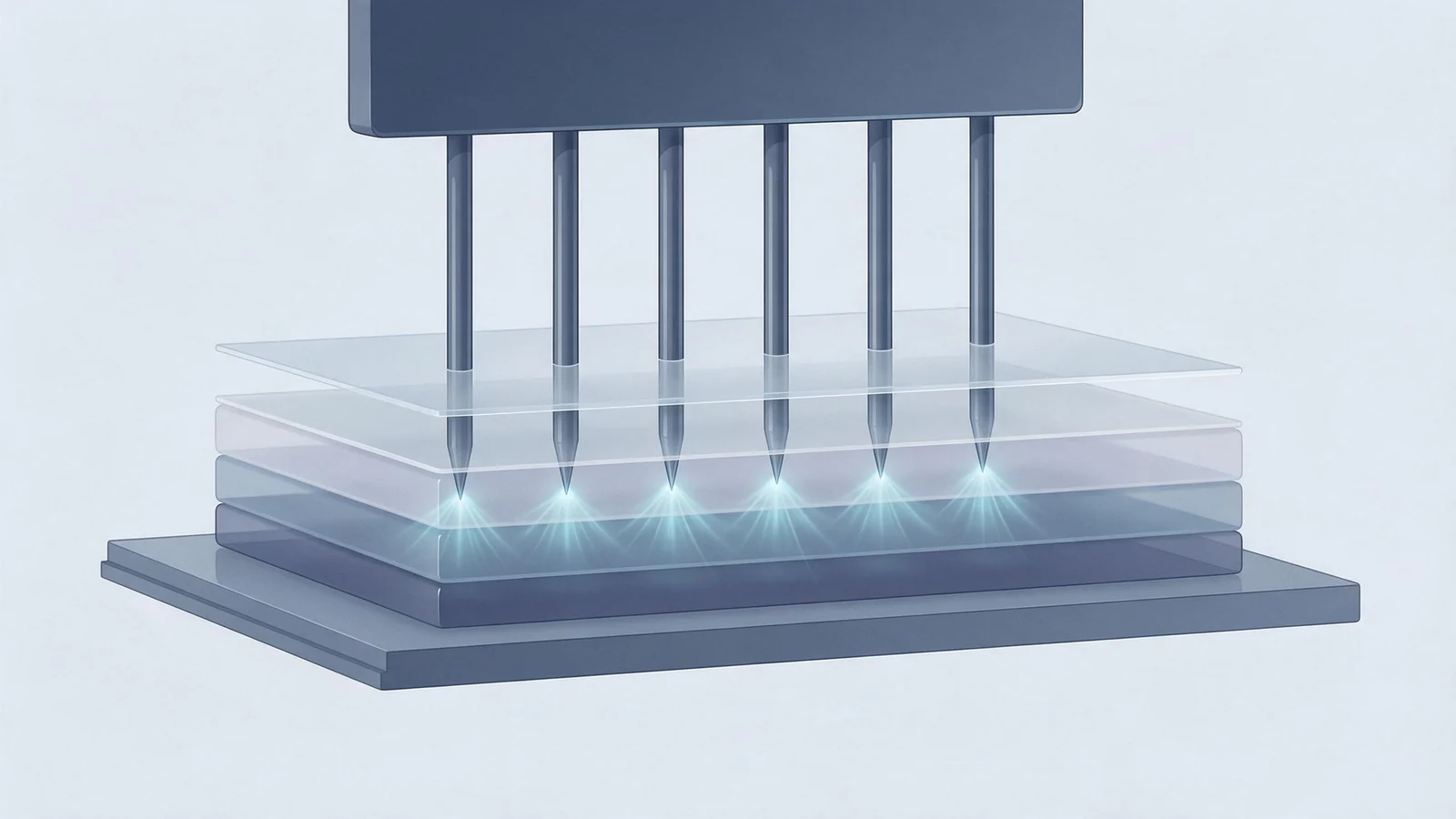
How RF microneedling actually works
You insert an array of fine needles into the skin. Each needle delivers radiofrequency current at its tip, or along its exposed length, heating the dermis to around 60–75°C, while the epidermis stays relatively cool because the needles are insulated except near the tip, or because the energy is focused below the surface. That thermal injury triggers collagen remodelling over weeks. Controlled depth and precise energy delivery are the key. A good professional microneedling machine lets you set needle depth to 0.5 mm for the forehead or up to 3.5 mm for deep scars on the cheeks. The RF then coagulates tissue in a column or an oval, depending on frequency and needle insulation. A 1 MHz insulated needle produces an ovular coagulation; a 2 MHz insulated needle creates a columnar one. That difference matters for how widely the heat spreads and how much surface damage you risk. Insulated needles are coated except for the final 0.4 mm, so only that exposed tip delivers energy. Non-insulated needles radiate along their whole length, which changes the thermal profile dramatically. A non-insulated 1 MHz array can look histologically similar to a 2 MHz insulated array. In practice, non-insulated needles heat more epidermis and carry a higher risk of post-inflammatory hyperpigmentation, especially on darker skin. Insulated tips give a safer default for Fitzpatrick III and IV patients, but you may need higher power to get the same dermal effect. You adjust depth and energy per pass, and the machine should let you save those settings for repeat clients.Needle depth and the skin type problem
Check depth adjustment first. Most devices range from 0.5 mm to 3.5 mm, with increments of 0.1 mm or 0.5 mm, and finer increments let you treat the periorbital area safely. Deeper settings reach the deep dermis where scar bands sit. But deeper isn't always better. On thin skin, 2.5 mm can hit fat and cause unnecessary pain or lumpiness, so the right machine gives you a hard stop, not a free-floating needle that wobbles under pressure.
Skin type dictates everything. Post-inflammatory hyperpigmentation has been observed in up to 25% of patients with darker skin types (Fitzpatrick III and IV) when treated with microneedling alone. Add RF and the risk can rise if you use non-insulated needles or high energy. To reduce PIH risk, avoid treating patients with obvious sun exposure, and consider starting with low energy and shallow depth on darker skin. RF microneedling may still be preferred over other modalities for those patients because it targets the dermis while minimizing epidermal injury. But you have to earn that safety with conservative settings.
Some devices offer insulated needles only; others give you both. If your clinic sees a lot of skin types IV–VI, insulated needles are the safer default. Non-insulated tips can be used for lighter skin or for treating conditions like periorbital wrinkles where the epidermal component might be beneficial. The machine should let you switch tips easily and track which tip is currently mounted. A handpiece that remembers the last tip type prevents accidental misuse.
Power, pulse duration, and the variables that matter
Most RF microneedling machines set energy from 1 to 10 on an arbitrary scale, not in joules. That's frustrating for clinical comparison, but it's the industry norm. You want fine control. Look for a device that lets you adjust pulse duration separately from the energy dial. Short pulses mean less heat diffusion and a tighter coagulation zone; longer pulses spread heat further. Heat dissipates seconds after the set conduction time. A precise timer matters for safety.
Frequency also changes thermal lesion shape. A 2 MHz insulated needle produces columnar coagulation, which may be better for deep scars. A 1 MHz insulated needle makes larger, ovular coagulations as you increase power. Neither is inherently better, but the machine should tell you its frequency. If it doesn't, walk away. The handpiece should also have automatic needle insertion and retraction, usually controlled by a footswitch. That keeps depth consistent and reduces operator fatigue. A manual push-in handpiece is a recipe for uneven passes and unhappy clients.
Needle count matters less than array geometry. A 5 × 5 pattern of 25 needles with 0.3 mm diameter and 2 mm spacing is common. Some devices use 36, 49, or even 64 needles. More needles cover a larger area per stamp, but they also need more power per pulse to heat each needle properly. The array should be replaceable and single-use. Reusing needles is a contamination risk and a legal liability. Budget for tip cost per treatment, usually $5–$15 per tip, and build that into your pricing. If the manufacturer says tips are reusable, check the sterilization protocol carefully. Autoclaving can damage the insulation coating over time.
Handpiece ergonomics and room setup
Your wrist takes the abuse. A heavy handpiece with a stiff cable will slow you down and cause uneven pressure over a full day of treatments. Look for a balanced handpiece under 400 grams, with a flexible cable that doesn't tug. The footswitch should be large and stable. It's easy to find without looking down, and some devices have a handpiece that vibrates or beeps when the needle array is fully seated. That prevents partial insertions.
Beyond the machine, the treatment room needs good lighting, a comfortable chair that reclines fully, and a trolley for the console and tips. You'll need topical anaesthetic, usually 30–60 minutes of application before the session. After treatment, the skin looks sunburned for 12–24 hours. Clients may have pinpoint bleeding that stops quickly, and downtime is generally 24–48 hours, with makeup allowed after 24 hours. Tell clients to avoid sun exposure for two weeks and use a broad-spectrum sunscreen. The room should have a sharps container for used needle arrays and a small fan or cooling device if you treat sensitive areas.
Training is non-negotiable. Even an experienced laser operator needs hands-on practice with a new RF microneedling machine to learn the depth settings, energy response, and tip change procedure. A good manufacturer provides a one-day onsite training or a detailed video course. Ask for both. You should also have a written protocol for each skin type and body area. Update it after the first ten treatments.
What to check before you buy
- Depth range: 0.5 mm to 3.5 mm, with 0.1 mm increments if possible.
- Insulated and non-insulated needle options, and the machine identifies which is installed.
- Energy control in fine steps, not just 1–10, and pulse duration adjustable.
- Automatic needle insertion and retraction via footswitch.
- Single-use needle arrays with clear pricing.
- Handpiece weight and cable flexibility.
- Frequency: 1 MHz or 2 MHz, and the machine displays it.
- Training and after-sales support included.
Your clinic needs depth control from 0.5 mm to 3.5 mm with 0.1 mm increments if possible. Look for insulated and non-insulated needle options, and the machine identifies which is installed. Energy control in fine steps, not just 1–10. Pulse duration must be adjustable too. Automatic needle insertion and retraction via footswitch is a must. Single-use needle arrays with clear pricing matter. Handpiece weight and cable flexibility affect your comfort. Frequency: 1 MHz or 2 MHz, and the machine displays it. Training and after-sales support included.
You can see how RF microneedling compares to other energy devices in our full buyer guides for HIFU and laser platforms. Check out our RF microneedling machine that follows these design principles. If clients want zero downtime, we have a non-invasive RF skin tightening device too.
FAQ
How deep can RF microneedling needles go?
Most professional machines allow needle depth from 0.5 mm to 3.5 mm, but the exact range depends on the model, so check the spec sheet. Deeper settings treat scars and laxity. Shallow depths suit the forehead or around the eyes, where skin is thinner and more sensitive. You'll find that adjusting depth per area gives you better results and fewer side effects.
Are insulated needles safer for dark skin?
Insulated needles reduce epidermal heating because only the tip is exposed. They carry a lower risk of post-inflammatory hyperpigmentation. For Fitzpatrick skin types III and IV, insulated needles are the safer default, but conservative energy settings remain essential.
How much downtime should clients expect?
Clients typically have redness and mild swelling for 12–24 hours, and pinpoint bleeding stops within minutes. Makeup can usually be applied after 24 hours. Most people return to work the next day, but sun protection is critical for two weeks.
What is the cost of consumable tips?
Single-use needle arrays cost between $5 and $15 per tip, depending on the brand and needle count. Factor that into your per-treatment pricing. Reusable tips are rare and require rigorous sterilization that can degrade insulation over time.
This page is educational material for equipment buyers, not medical advice. Always follow your local regulations and ensure operators are properly trained and licensed.
Evidence and further reading
Educational material for equipment buyers and operators. It is not medical advice, an operating protocol or a promise of clinical outcome.
- The Efficacy and Safety of Radiofrequency Microneedling for Melasma: A Systematic Review and Qualitative Evidence Synthesis - PMC
- The Effectiveness of Microneedle Bipolar Fractional Radiofrequency ...
- An evaluation of electrocoagulation and thermal diffusion following radiofrequency microneedling using an in vivo porcine skin model
- Efficacy and Safety of Using Noninsulated Microneedle Radiofrequency Alone versus in Combination with Polynucleotides for Treatment of Periorbital Wrinkles
- A Systematic Review Examining the Potential Adverse Effects of Microneedling
Keep reading
Ready to spec your next machine?
Tell us the indication, your market and the certifications you need. Our export team replies with a configuration and quotation within 12 to 24 hours.