[email protected]  ·  +86 133 2121 6666 FDA / CE / RoHS / SGS certified
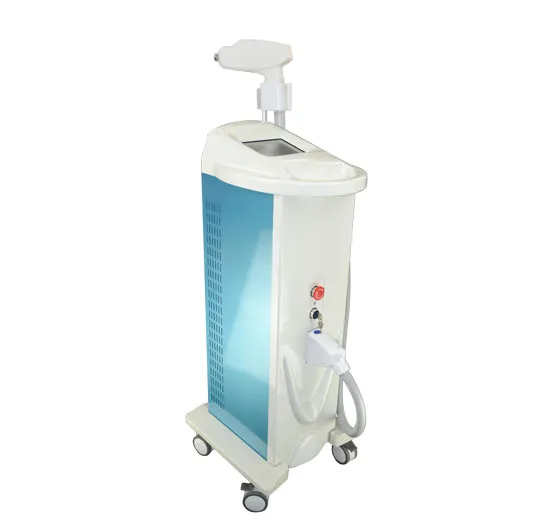
Pmise DL-07 808nm Diode Laser Hair Removal
Diode Laser Hair Removal

Pmise DL-07

An 808nm diode laser hair removal machine for rooms that run back to back all day. Sapphire contact cooling, 300W, sliding passes that need neither gel nor numbing cream.

DL-07 has one job. It clears pigmented hair, hour after hour, without drama. Fluence runs 2 to 80 J/cm² from a single 13mm x 15mm handpiece, so the tip that skims a lip is the tip that covers a back. Shave, set three numbers, start moving.

Who buys one? Medspas where hair removal pays the rent, and distributors wanting a platform a new operator learns before lunch. Throughput is the pitch; running cost is the quieter argument.

New to the wavelength argument? Start with how 808nm diode hair removal works.

How it works

Selective photothermolysis is the whole idea, described by Anderson and Parrish in 1983. Melanin in the shaft and follicle drinks 808nm light; the epidermis above absorbs less. Push energy in faster than the follicle sheds heat and the germinal cells give up.

Cooling sets your real ceiling. A sapphire window rides a closed water loop, chilled before, during and after each pulse, and our manuals want 5 to 8 minutes of warm-up at 18°C before the first client. Three coupled dials do the rest: pulse width 5 to 200ms, frequency 1 to 10Hz, power from 33 percent upward. Widths of 5 to 20ms take the full 10Hz; 25 to 40ms drops you to 1-5Hz; 45 to 100ms to 1-2Hz; past 100ms, one pulse a second. That ceiling is thermal, and firmware enforces it. Schedule around it, because a stacked back at long widths is a slower room than legs at 10Hz.

Two honest styles fall out of that. In motion means short pulse, modest fluence, 10Hz, tip gliding fast while passes accumulate; our house start is 20ms at 10Hz, power at 33 percent. Stacking is the opposite: long pulse, big single-shot energy, tip held still, which coarse dense hair rewards. Feels sharp fast? Move quicker.

Phototype moves the numbers, not the method. Our parameter sheet starts types I-II near 8 to 10 J/cm² on lip, underarm, arms and legs, trims III-IV slightly, then drops type V to roughly 4 to 5 with shorter durations. For type VI it publishes nothing. Read how to read Fitzpatrick skin types, then patch test. You want small papules around the follicles, redness, warmth. Blistering is a mistake, not an endpoint.

Applications

  • Face and body reduction on shaved skin: lip, chin, underarms, arms, chest, back, bikini, legs
  • Coarse, darkly pigmented hair, where 808nm earns its money; grey, white and vellus hair carry too little melanin, so screen before selling a package
  • Skin wrecked by years of shaving and ingrown hairs, where thinning follicle count beats cosmetic clearance
  • Hormone-driven excess hair referred by a physician: the laser manages what has grown, the clinician handles the cause
  • Multi-room clinics and distributors needing a console one person wheels and a new operator learns fast

Key advantages

  • No gel, no cartridge, nothing per shot; you spend on power, pure water and a cheap filter
  • Cooling you can verify in ten seconds, backed by alarms for water flow, temperature and quality
  • Session and lifetime shot counters on screen, the honest way to cost a room and time your service
  • Firmware caps pulse width against frequency, so nobody dials a duty cycle the handpiece will not survive
  • Key switch, foot pedal, door interlock and emergency stop, on a 30kg console you can wheel yourself

Specification

Laser Type808nm Diode Laser
Laser Power300W
Energy Density2-80J/cm²
Spot Size13mm x 15mm
Pulse Width5-200ms
Frequency1-10Hz
Input Power1200W
CoolingConstant condenser
Net Weight30kg
Water Temperature18-26°C

Frequently asked questions

Which skin types can the DL-07 treat?

808nm reaches the follicle with less epidermal melanin absorption than shorter wavelengths, so it suits a broad range of phototypes. Headroom shrinks as skin darkens. Our sheet starts types I-II near 8 to 10 J/cm2 and type V at 4 to 5 with shorter pulses. For type VI it gives nothing. Tanned skin belongs with a clinician.

How many sessions should we plan?

Plan a course, never one visit. Only follicles in active growth take the hit, so passes weeks apart catch different cohorts. The American Academy of Dermatology's patient page states that removing the unwanted hair can take 6 sessions or more, and that laser hair removal can be repeated when the hair regrows. A 2006 Cochrane review by Haedersdal and Gotzsche found long-term evidence weak. Sell reduction, not a promise.

What does it cost to run?

Very little per pass, which is most of the appeal. Budget power, pure or distilled water, and a spare inline filter, the cheapest line on our spare parts list. The handpiece carries the diode stack and is the dearest replacement by far. Our manuals publish no shot-life figure; watch the lifetime counter, change water every 30 days.

What training, warranty and service come with it?

Every DL-07 ships with an English manual covering installation, water filling, operation and daily upkeep, plus remote training for your staff. Spare parts and engineering support come from our factory team under a one-year warranty with lifetime maintenance. Spend the training hours on the water routine; the troubleshooting pages are dominated by water faults, not optics.

What can this machine not do?

It cannot touch hair without pigment. Grey, white and most vellus hair carries too little melanin, and no setting fixes that. Hormone-driven growth needs a diagnosis, not a longer pulse. Our manuals rule out pregnancy, pacemakers, photosensitising drugs such as tetracycline, undiagnosed lesions, keloid tendency, recent anticoagulants, and skin treated just before or after sun.

Evidence and further reading

Educational material for equipment buyers and operators. It is not medical advice, an operating protocol or a promise of clinical outcome.

Ready to spec your next machine?

Tell us the indication, your market and the certifications you need. Our export team replies with a configuration and quotation within 12 to 24 hours.